

the perfect address
In the time it takes to read this, you’ll have travelled thousands of miles through space without feeling a single bump!
Modern astronomy and physics have revealed remarkable details about why our tiny planet is so uniquely placed in the cosmos and ideally suited for life.
The Galactic Habitable Zone
Our solar system resides in a region of the Milky Way that researchers refer to as the galactic habitable zone. Located approximately 28,000 light-years from the galactic core, this area holds the precise balance of chemical elements required to sustain living organisms. Further out, these elements become too rare. Closer in, the environment becomes far too hazardous due to high levels of lethal radiation. As Scientific American noted, “We live in prime real estate.”
The Ideal Orbit
Our location within the solar system is equally impressive. Positioned roughly 93 million miles from the sun, the world orbits inside the circumstellar habitable zone, an area where temperatures are neither too hot nor too cold. Furthermore, the path is nearly circular, keeping temperatures relatively steady throughout the year.
The sun serves as an ideal energy source. It’s remarkably stable, perfectly sized, and emits just the right amount of light and heat. Scientists often refer to it as a truly unique star.
A Tailor-Made Companion
Earth’s nearest celestial companion, the moon, plays a vital role in keeping conditions stable. Its width is roughly a quarter of our world’s, making it unusually large compared to other moons in relation to their home planets.

This size difference isn’t a random coincidence. The moon drives ocean tides, which are essential for marine ecosystems, and acts as a gravitational stabiliser for the planet’s axis. Without such a well-proportioned moon, the world would wobble unpredictably, potentially tilting onto its side and causing disastrous environmental collapse.
Balanced Axis and Rotation Speed
A tilt of 23.5 degrees creates the natural progression of seasons, balances global temperatures, and allows diverse biomes to flourish. As highlighted in Rare Earth, “Our planet’s tilt axis seems to be ‘just right’.”
The planet’s rotation rate is equally balanced. If the day-night cycle were much longer, one side of the world would scorch while the other would freeze. If the world spun much faster, the rapid rotation would trigger constant, destructive storms.
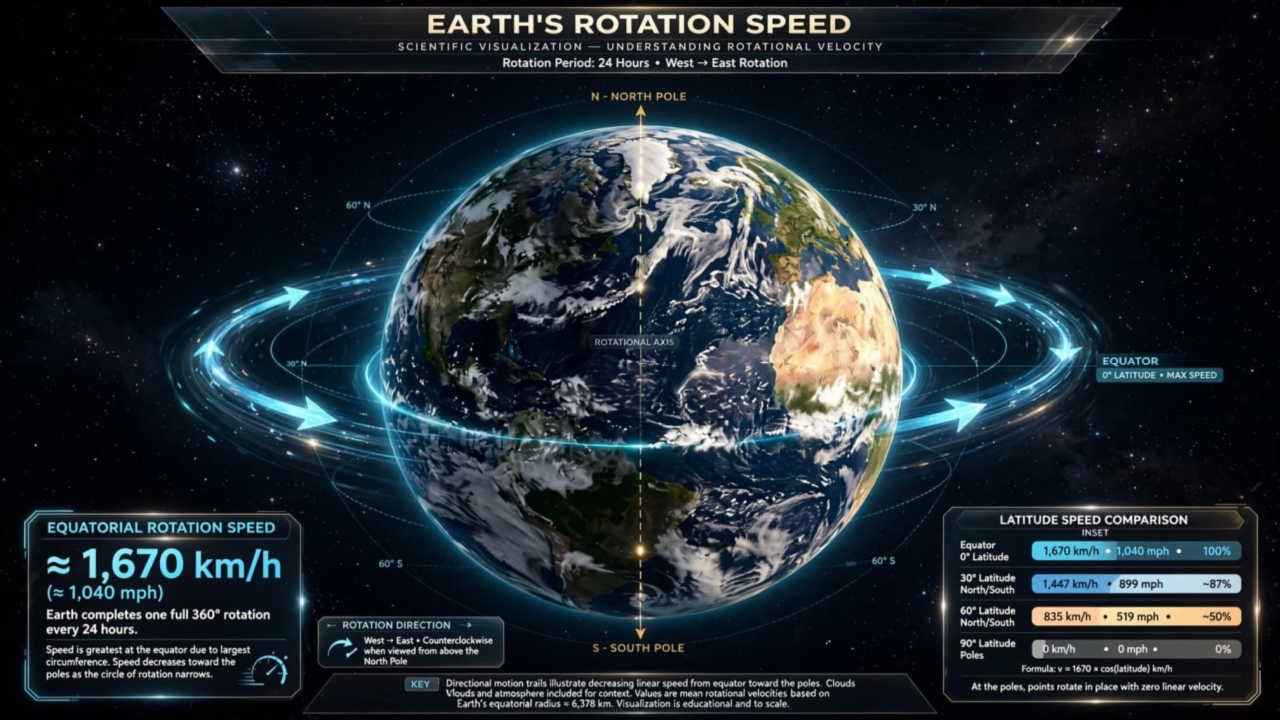
Every aspect of our planet, from its cosmic address to its rotation speed and lunar companion, points toward extraordinary design. As one physicist once remarked, “Even sceptical scientists wax lyrical about the scale, the majesty, the harmony, the elegance, and the sheer ingenuity of the universe.”
Protecting this harmony are natural shields that continuously safeguard our world from cosmic hazards.
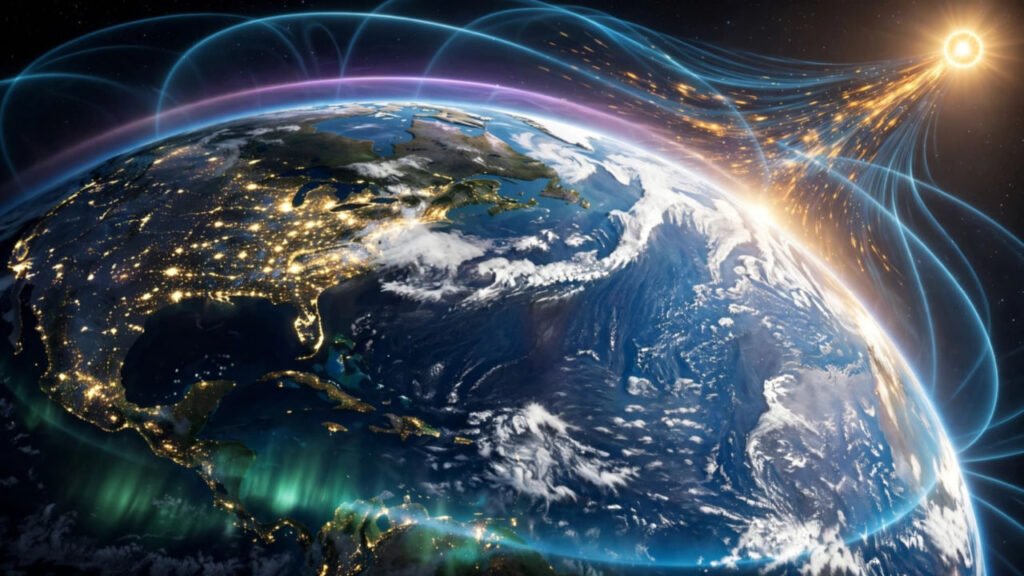
Earth’s Magnetic Shield
- Earth’s outer core swirls with liquid iron and nickel, creating a magnetic shield around the world…
- It deflects solar wind, pushing away high-energy charged particles and plasma sent by the Sun…
- Dangerous particles get trapped inside the ring-shaped Van Allen belts…
The Atmosphere and Ozone Layer
- Air pressure keeps gases close to the surface, ensuring liquid water and breathing air stay stable…
- High up in the stratosphere, the ozone layer filters out lethal ultraviolet light from the Sun…
- Friction in the air vaporises most incoming meteors before they hit the ground…
Gravity
- It pulls down air molecules so they don’t drift away into the vacuum of space…